
7 Ways to Create a Calmer, More Restorative Home
If you’ve ever walked into a room and immediately felt tense, overstimulated, or unsettled, you are already aware of how your home affects your nervous system. A calmer home is not about perfection or minimalism. It is about creating a restorative environment that helps your body soften, reset, and feel supported throughout daily life.
We often think about recovery as something we must intentionally schedule: a yoga class, a massage, a weekend away, or a quiet morning when the calendar finally allows it. But recovery is also happening—or not happening—in the ordinary spaces where we spend our days.
Our homes are constantly communicating with us through light, sound, temperature, texture, clutter, and the number of things competing for our attention. When we begin thinking about home as part of our wellness routine, small changes can have a surprising impact.
If you want to create a calmer home without overhauling everything, start small: reduce visual clutter, soften your lighting, bring in natural textures, create one expectation-free corner, notice your soundscape, add warmth, and build simple transition rituals into your day.
Here are seven simple, personal ways to begin creating a home that supports nervous system recovery.

1. Reduce Visual Clutter for a Calmer Home
Our eyes are constantly taking in information: mail on the counter, shoes near the door, dishes waiting to be put away, or notifications flashing across a screen.
Even when we are not consciously thinking about these things, our brains are still processing them. Visual clutter can create a subtle sense that there is always something left to do. The stack of mail becomes a reminder to pay bills. The laundry basket becomes a task. The crowded countertop becomes another area asking for attention.
This does not mean your home needs to become minimalist or cleaned to perfection. A restorative home should still feel personal, warm, and lived in. Instead, begin by creating areas of visual quiet in the spaces that matter most to you.
For me, the kitchen is always an easy place to start because many of us spend so much time there. I cannot start a new day by looking at dirty dishes from yesterday, so making sure the dishes are done after dinner helps the next morning feel calmer. The same logic applies to making your bed each morning. It’s worth the extra few minutes in the morning to give yourself that small moment of calm in the evening. Pay attention to what you see when you first walk into a room. That first visual impression often shapes how the space feels. Creating visual calm is not about removing everything you own. It is about giving your eyes—and your brain—places to rest.
2. Use Lighting to Support Rest and Relaxation
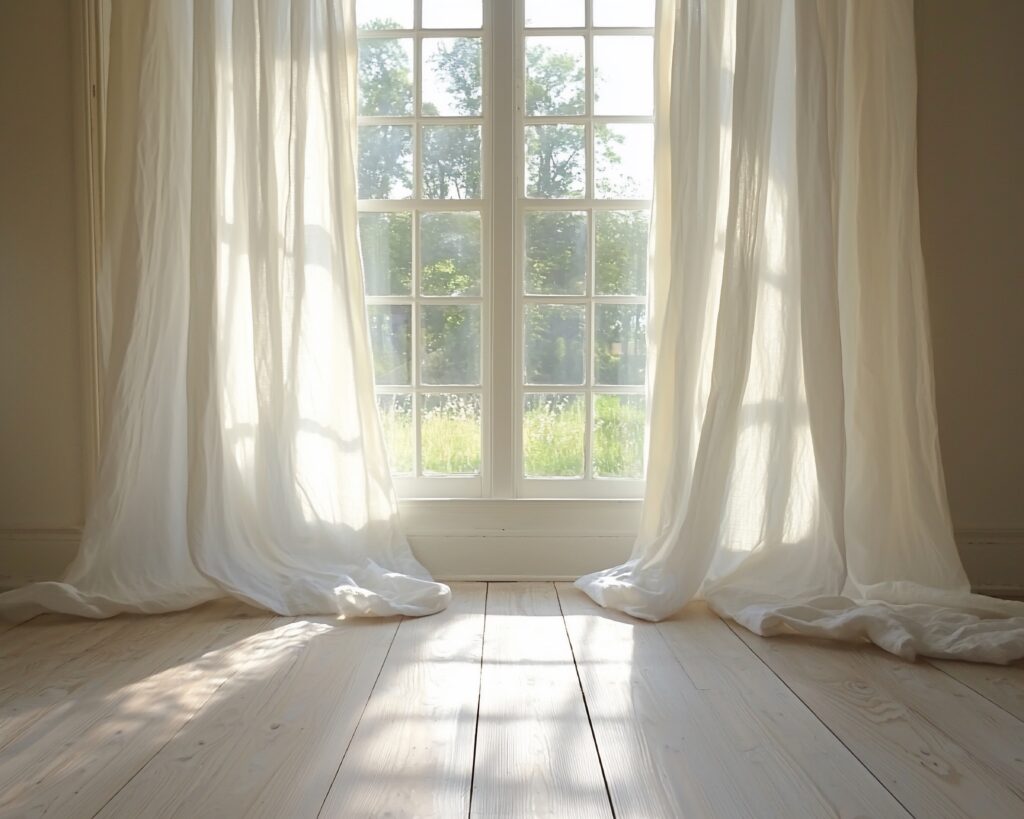
Lighting has an enormous influence on the atmosphere of a home, yet many of us use the same bright overhead lights from morning until night.
Our bodies naturally respond to changes in light. Morning light signals the beginning of the day, while softer evening light helps create a sense of transition toward rest.
Whenever possible, begin the day with natural light. Open the curtains, raise the blinds, or better yet, step outside for a few minutes while your coffee brews.
As evening approaches, gradually soften the light inside your home. Turn off overhead lights and use lamps instead. Choose warmer bulbs for bedrooms and living spaces, make use of dimmers, or light a candle while making dinner or reading.
Think of evening lighting as a cue: the day is slowing down, there is less to respond to, and rest is approaching. You do not need a complicated evening routine when your environment is already helping communicate that the pace of the day is changing.
In Nordic homes, where seasonal changes in daylight can be dramatic, lamps, candles, and pools of soft light create a feeling of shelter. We can borrow from this idea. A home does not always need to be fully illuminated. Sometimes dimness is part of rest.
3. Bring Natural Elements Into Your Home
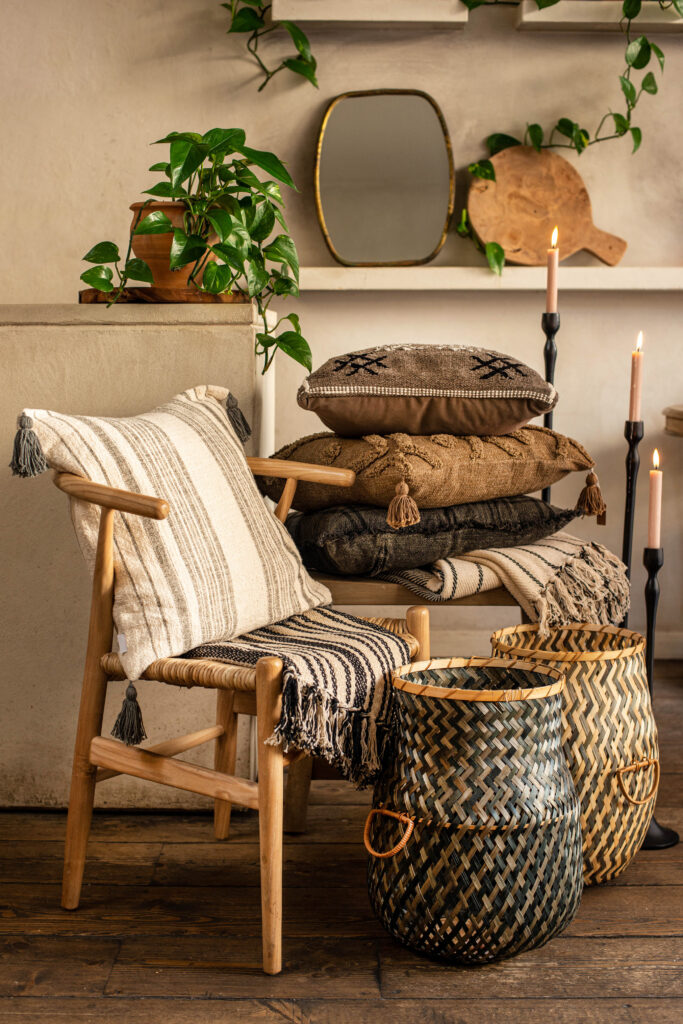
Biophilic design is simply the idea of reconnecting people with nature by incorporating natural elements into the home. I’m reluctant to call it a trend because this has been my go-to style for years; I just never knew there was an actual term for it.
This can be as simple as adding a plant to a room or placing a vase of branches on the table, but it is not limited to houseplants. Natural materials like wood, stone, linen, wool, clay, and woven baskets can help soften the hard edges of modern life.
These materials bring texture and variation into a space. Unlike perfectly manufactured surfaces, natural materials often contain small imperfections: grain, knots, uneven edges, and subtle differences in color. There is something grounding about being surrounded by materials that remind us of the outside world.
You can also pay attention to the views from your windows. If you have a window overlooking trees, a garden, or even an open patch of sky, consider arranging a chair where you can enjoy it.
Seasonal elements can help connect your home to the rhythms outside: branches in winter, fresh greenery in spring, garden flowers in summer, and dried grasses in the fall. A restorative home reminds us that we are still part of the natural world.
4. Create a Restorative Corner With No Expectations
Many areas of our homes are connected to productivity. The kitchen requires cleaning. The office is for work. The laundry room holds an endless chore. Even the bedroom can become a place where we answer emails, fold clothes, and scroll through our phones.
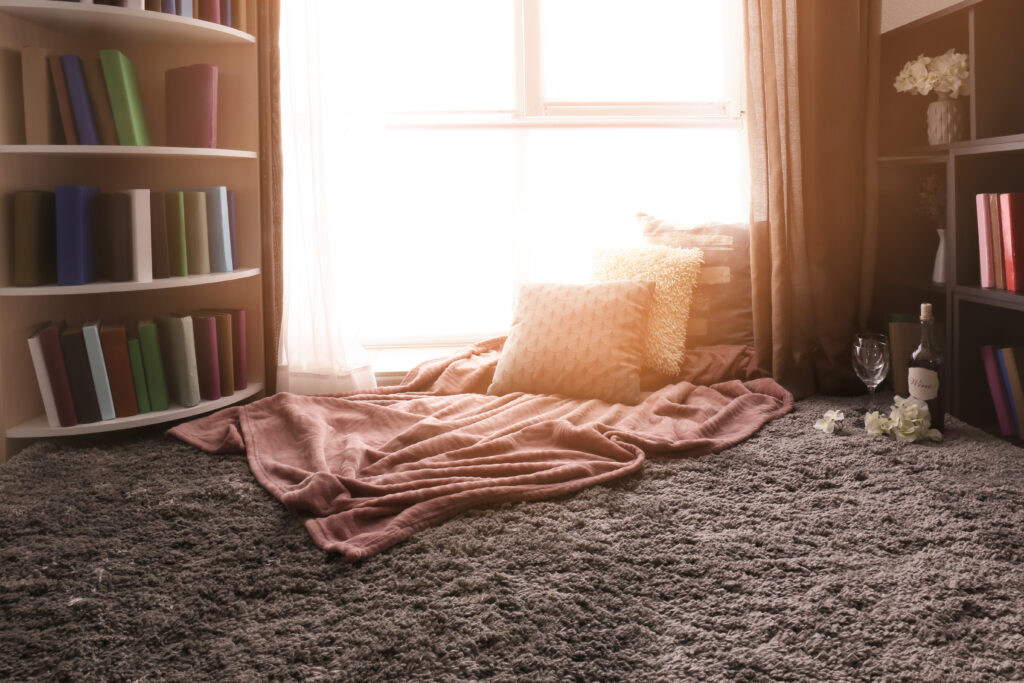
Create one small space in your home where nothing is expected of you. And before you roll your eyes and tell me your house is too small for this; it does not need to be a significant amount of space, certainly not an entire room.
It might be a chair near a window, a corner of your bedroom, a comfy bench on the porch, or a cushion near the fireplace. The purpose of this space is simple: it is somewhere you are allowed to stop.
Do not fill it with things you think you should be doing. You do not need a stack of self-improvement books beside the chair. I’m specifically including this because I am so guilty of it! The untouched journal with the beautiful gel pen and the frilly bookmark? Yep, guilty of that too.
This does not need to be another complicated ritual. You can sit there with coffee. You can read. You can snuggle a pet. You can look outside. You can do absolutely nothing.
The power of this space comes from allowing yourself a moment to simply be present. Over time, your body begins to associate certain environments with certain experiences. When you regularly sit in the same place to slow down, the space itself can begin to feel like a cue for rest.
This is one reason atmosphere matters, and I will be revisiting this topic often. Be intentional about creating at least one space that says: you do not need to accomplish anything here.

5. Reduce Background Noise and Create Pockets of Quiet
Sound is one of the most overlooked elements of home wellness. We become accustomed to the background noise of our lives: the television playing from another room, notifications, appliances humming, podcasts while we cook, music in the shower, videos while we fold laundry.
There is nothing inherently wrong with any of these things. But constant sound means our brains are rarely given periods of reduced input.
Take notice of how often something is playing in your home and experiment with small pockets of quiet. Make coffee without immediately turning on a podcast. Fold laundry without watching a show. Sit in your living room for ten minutes without reaching for your phone.
At first, quiet can (and will) feel uncomfortable. We are used to being entertained, informed, or distracted. But silence creates space, and you may begin noticing the sounds that were already there naturally: wind, birds, rain against the windows, the movement of your house, or in my current location, a cat snoring in the chair beside me.
Sound can also be used intentionally to create atmosphere: soft music during dinner, a familiar playlist in the evening, the crackling of a fire, or my personal favorite, the sound of moving water.
The goal is not to create a silent home. It is to become more conscious of the soundscape you are living within. Ask yourself whether the sounds around you are adding to your environment or simply providing a distraction from it.

6. Add Warmth and Texture for Comfort
There is a reason we instinctively reach for blankets when we are tired: warmth and softness communicate comfort. A restorative home should give the body opportunities to physically soften.
Think about the textures you interact with every day: your bedding, bathroom towels, the chair where you read, the blanket on your sofa, the rug beneath your feet, or the material of your favorite sweater.
You do not need to replace everything in your home, and I really want this point to be clear. This does not need to be costly to be significant. Instead, notice where small improvements would have the greatest impact.
Perhaps it is softer bedding, a heavy wool blanket, a silky robe hanging near the shower, or a rug beside the bed so your feet do not immediately meet a cold floor. These small sensory experiences shape the way we move through our homes.
Temperature matters too. Warmth has long been part of restorative traditions around the world, particularly in Nordic cultures where saunas are woven into everyday life. You may not have a sauna at home, but you can still create rituals around warmth.
A hot shower at the end of the day. A warm bath. Tea held between your hands. Sitting near a fireplace. Wrapping yourself in a blanket and stepping outside on a cool morning.
These experiences bring our attention back into the body. In a world that constantly pulls us in different directions, physical sensation can be deeply grounding. Sometimes recovery begins with something as simple as getting warm.

7. Use Simple Home Rituals to Create Daily Transitions
One challenge of modern life is that everything tends to blend together, especially for those working from home. We answer work emails from the sofa, scroll through our phones in bed, eat while watching television, and move from one task to another without clearly ending the first.
Our bodies rarely receive a signal that one part of the day has finished and another has begun. Small transition rituals at home can help.
When you finish working, close your computer and put it away. Change your clothes. Wash your face. Step outside for a short walk with the dog. Turn on a lamp. Start music while making dinner. These actions may seem small, but they create boundaries between experiences.
You can also create a simple closing ritual for your home each night. Clear the kitchen counter. Turn off unnecessary lights. Put a few things back where they belong. Set out what you need for the morning. Then allow the house to settle.
The goal is not to complete every chore before bed. It is to create a sense of closure.
Your Home Does Not Need to Be Perfect to Be Restorative
A calm home is not a home without mess. It is not a home filled with neutral furniture, expensive linens, or perfectly styled shelves. It is a home that gives you opportunities to relax and recover.
A chair where you can sit without doing anything. A window that connects you to the season outside. A soft lamp that signals the evening has begun. A warm shower after a long day. A quiet kitchen in the early morning.
These moments may seem ordinary, and that is exactly why they matter. Wellness cannot only exist in the hours we intentionally set aside for it. It must find its way into our everyday environments and routines.
The spaces where we live shape the pace of our lives. They influence what we notice, what we reach for, how quickly we move, and whether we ever feel permission to stop.
You do not need to transform your entire home. Choose one room. One corner. One small ritual. Notice how it feels. Then begin again from there.
Creating a restorative home is not about designing a retreat from your life. It is about creating a home that helps you return to yourself.
Want help getting started? Download the Calm Home Audit, a simple room-by-room checklist designed to help you notice what feels overstimulating, what feels supportive, and where small changes could make your home feel more restorative.